Medical Imaging AI at Contrast AI
Project Overview
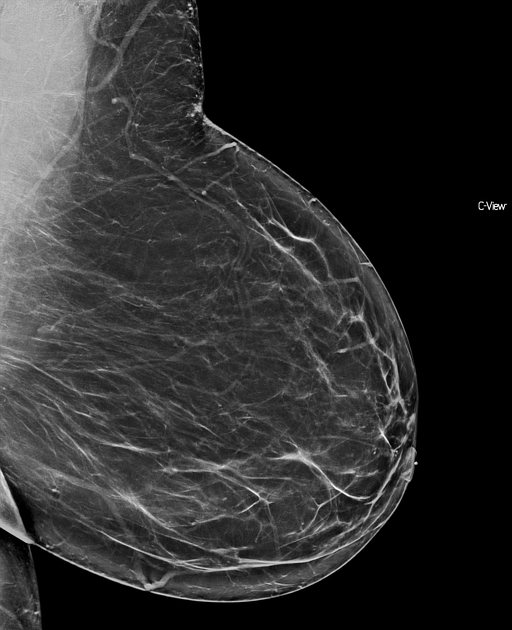
As a Machine Learning Engineer at Contrast AI, I lead the research and development of generative computer vision models for clinical applications. My work focuses on overcoming data scarcity and improving diagnostic quality through novel deep learning architectures and data-centric AI pipelines.
I specialize in building Generative Adversarial Networks (GANs) and U-Net based architectures that surpass current state-of-the-art results, ensuring models are robust enough for real-world clinical deployment.
Key Achievements
| Area | Achievement |
|---|---|
| SOTA Performance | Developed generative models surpassing literature baselines in both quantitative metrics (PSNR, SSIM) and expert clinical review |
| Pipeline Engineering | Designed end-to-end training/inference pipelines ensuring reproducibility in clinical settings |
| Architecture Design | Implemented custom GAN and U-Net variants with optimized loss functions for medical data |
| Production AI | Integrated models into product workflows with comprehensive performance monitoring |
Technical Stack
| Category | Tools & Technologies |
|---|---|
| Deep Learning | PyTorch, TensorFlow, Keras |
| Architectures | CycleGAN, U-Net, Transformers |
| Computer Vision | Image-to-Image Translation, Segmentation |
| MLOps | Pipeline automation, Experiment tracking, Model versioning |
Core Responsibilities
- Research & Development: Conducting R&D on cutting-edge computer vision models for medical imaging.
- Custom Solutions: Developing custom loss functions, data-augmentation strategies, and preprocessing solutions to handle high-variance medical data.
- Modular Architecture: Building highly modular codebases to support rapid experimentation and collaboration with Ph.D. researchers.
- Clinical Integration: Ensuring model performance translates from research benchmarks to reliable clinical utility.
Impact
My work directly bridges the gap between research and clinical application. By developing clearer, higher-quality generative imaging models, we enable more accurate diagnostics and reduce the dependency on large-scale labeled datasets. The models are currently deployed in production clinical environments.